“Everyone grab the key, everyone reach the door” — that’s all you have to do, and somehow it always turns into chaos. PICO PARK is a cooperative action puzzle game for 2 to 8 players. The controls are just move and jump. With radical simplicity and stages where everyone is a participant, it has remained a go-to party game years after release.
Game Info
| Title | PICO PARK |
|---|---|
| Developer | TECOPARK |
| Platforms | Nintendo Switch / Steam |
| Price | Steam version ¥520 (tax incl., checked November 2026) / Switch version ¥500 (tax incl.) |
| Genre | Action > Party > Co-op |
| Players | 2–8 (local / online) |
| Estimated Playtime | Around 2–4 hours to clear all stages (varies greatly with player count and how stuck you get) |
| Languages | Japanese supported on the Switch version. The Steam store lists English only, but in-game text is minimal. |
Who This Is For
- People who want a game to shout and laugh over with friends or family
- People looking for something simple enough that non-gamers can join in
- People who enjoy both the satisfaction of teamwork and the comedy of teamwork falling apart
What Kind of Game Is It?
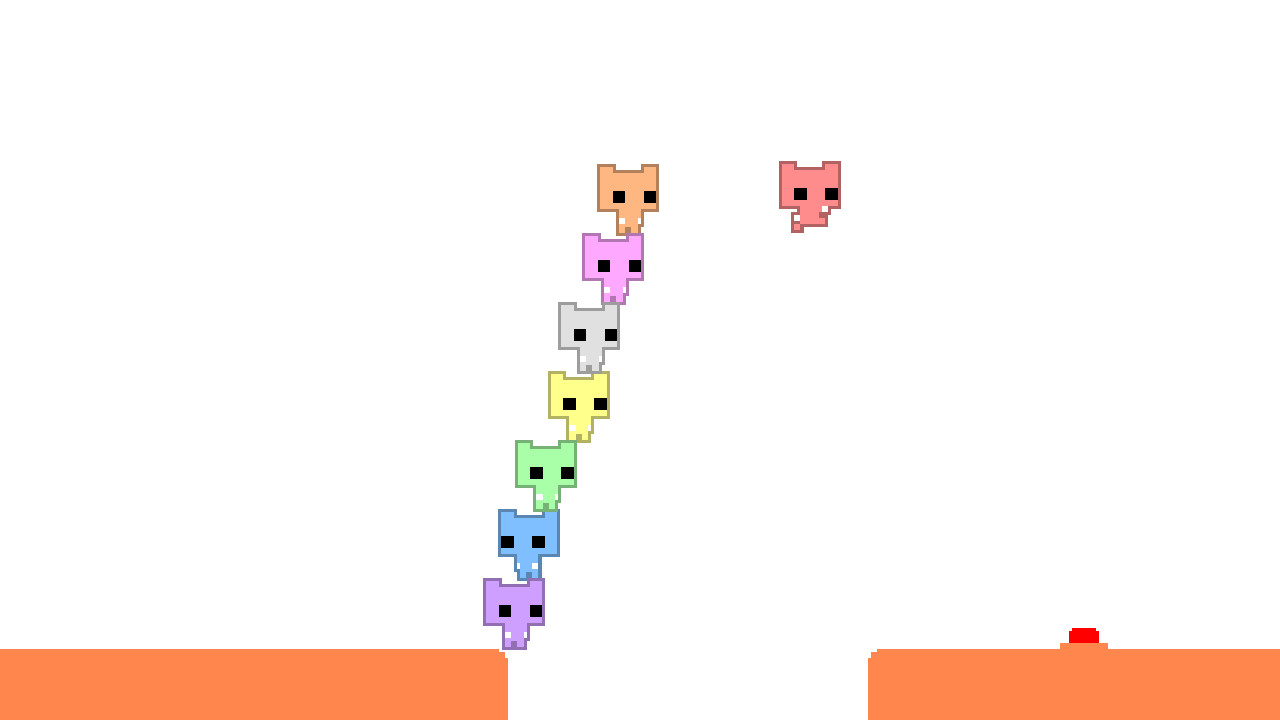
Each stage asks everyone to grab the key and reach the goal door — but the door only opens when everyone is there. You stand on each other’s heads to reach high places, move while tied together by ropes, and hold buttons down while the others advance. Every stage is a puzzle solved by the whole group.
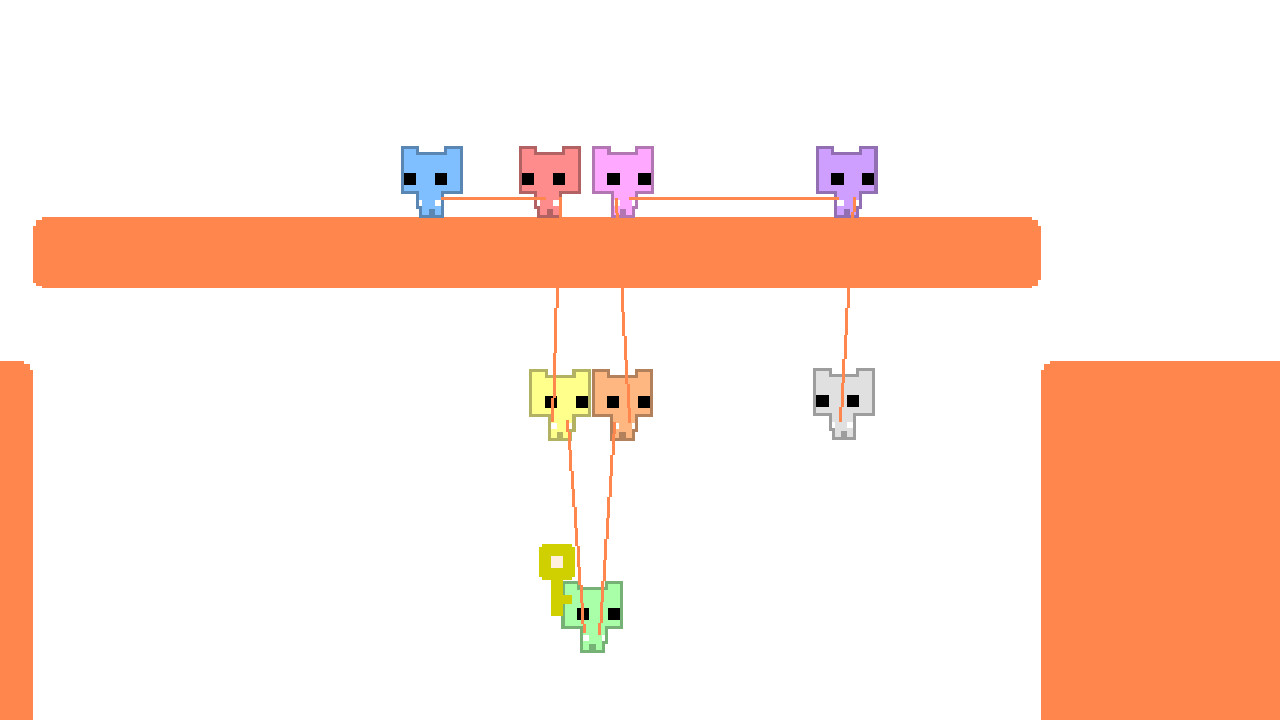
Moving as a chain of players (official screenshot) © TECOPARK
If one person fails, everyone restarts. This shared-responsibility design naturally gets people calling out to each other. More players means more chaos: with 2 players it’s tight, coordinated play; with 8 it’s an uncontrollable festival — the same stage wears completely different faces.
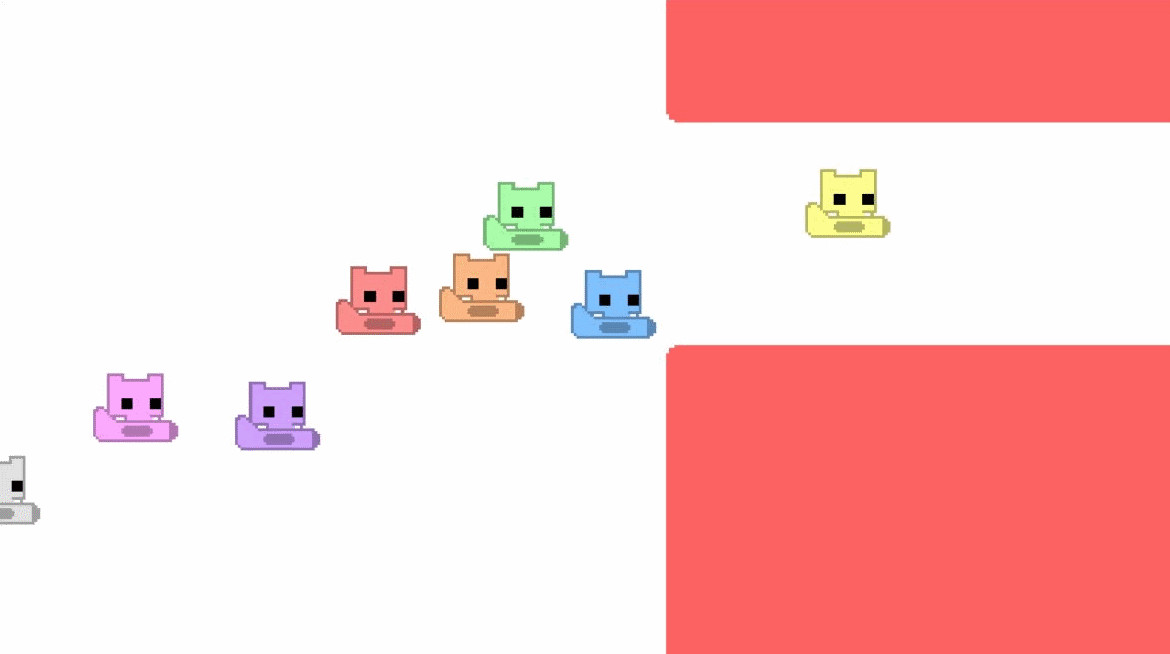
Solving a gimmick together (official screenshot) © TECOPARK
What Makes It Special (Creator’s Eye)
1. Making “everyone arrives” the condition turns cooperation from flavor into necessity
In many co-op games, one skilled player can carry the team. Here, the goal condition is everyone’s arrival, so nobody can be left behind. Weaker players aren’t a burden — instead, stronger players switch to thinking about how to help. The roles rotate naturally, and that’s the brilliance of it.
2. With only two inputs, all difficulty concentrates on teamwork
Anyone can learn move-and-jump in minutes. That means failures almost never come from execution — they come from being out of sync. Which is exactly why it’s funny, and why “let’s sync up this time” is always a reason to retry. The difficulty is placed in a very pure spot.
3. Player count itself is the difficulty dial
More players means more physical crowding and more communication load — difficulty that scales without redesigning stages. Treating the player count as a variable is a very party-game kind of elegance.
Points to Note
- You cannot play alone — this is a multiplayer-only game for 2 or more players
- Online play is far better with voice chat; without a way to communicate, hard stages can stall
- The stage count is modest — this is a game to enjoy in lively bursts rather than long solo sessions
Similar Games / What to Play Next
- The sequel PICO PARK 2 adds more stages and gimmicks, tuned for bigger groups
- If you like physics-driven slapstick, Heave Ho is another good pick
Summary
PICO PARK draws both the joy of teamwork and the comedy of chaos from a single rule: everyone reaches the goal. It’s inexpensive, and it’s hard to beat as the first game to put on when people gather.
- This article is based on official information, store listings, and published footage
- All images are official materials (© TECOPARK)
- Prices and details were checked in November 2026