Why is moving house this funny? Moving Out is a moving simulator in which up to four players cooperate to haul physics-driven, floppy furniture onto a truck. The rule is simply “get the furniture out in time” — and yet something goes hilariously wrong on every job, making it a party game where even failure ends in laughter, beloved around the world.
Game Info
| Title | Moving Out |
|---|---|
| Developer | SMG Studio / Devm Games |
| Platforms | Nintendo Switch / Steam |
| Price | Steam version ¥2,570 (tax incl., checked November 2026) / Switch version ¥2,750 (tax incl.) |
| Genre | Action > Party > Physics |
| Players | 1–4 (local co-op) |
| Estimated Playtime | Around 5–8 hours to clear the main jobs; around 15 hours to fully complete the rankings |
| Languages | English and Japanese supported |
Who This Is For
- People looking for a game to play together on one screen, shouting and laughing
- People who enjoy party games driven by energy rather than skill
- People who love co-op games that somehow turn into friendly sabotage
What Kind of Game Is It?
The stage is the busy town of Packmore. As a new recruit of the moving company Smooth Moves, you clear furniture out of houses, farms, and even stranger properties. Big pieces like sofas and beds take two people to lift; if your timing is off, the sofa spins in place or jams in a doorway.
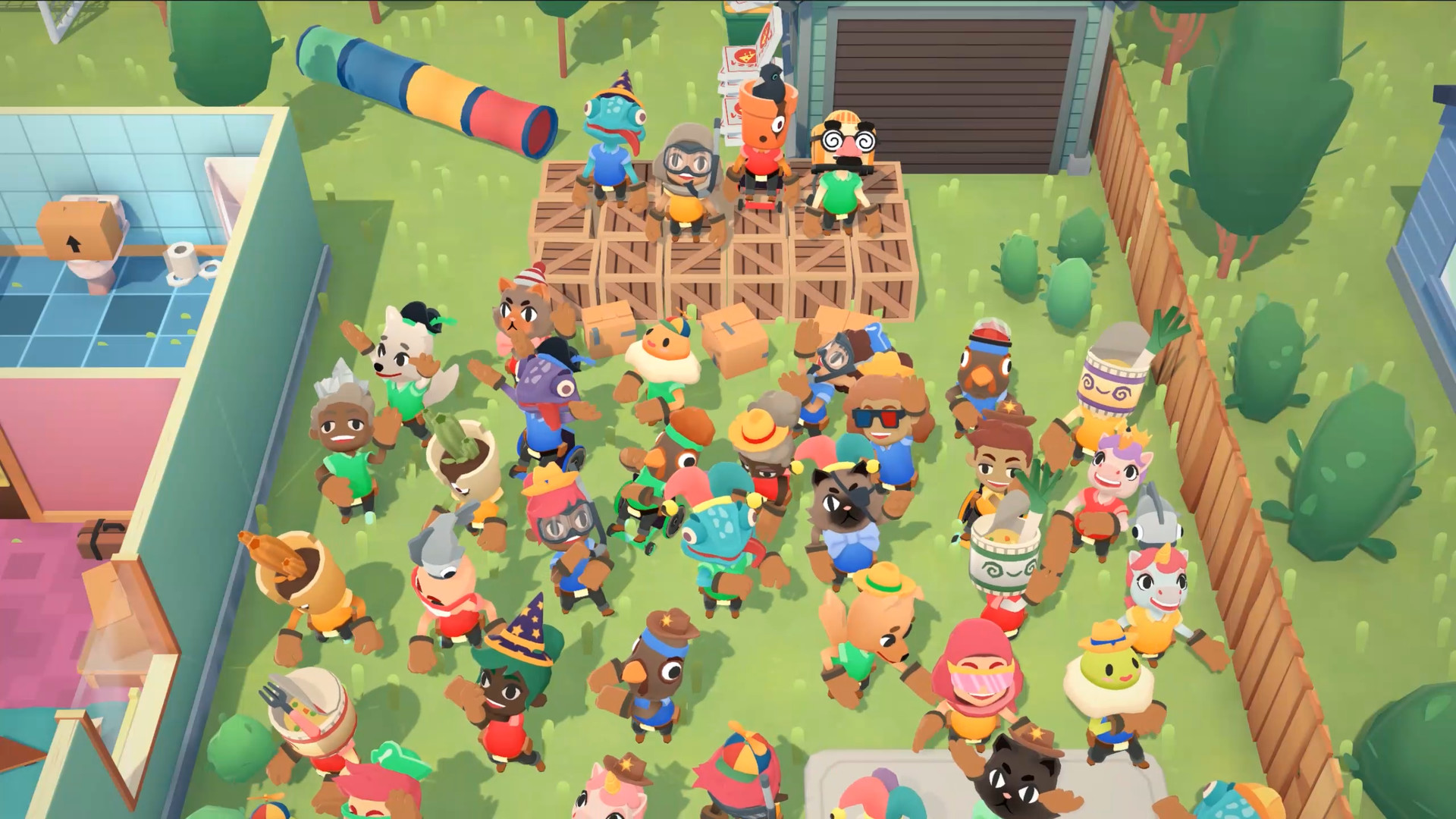
The playable movers, from animals to oddballs, all lined up (official screenshot) © SMG Studio
How you move things is up to you. Smash through a window, toss it in the pool — as long as it lands on the truck, it counts. Each stage has a time limit and rating targets: the faster and fuller the truck, the higher your rank. Its Metacritic Metascore stands at 79.
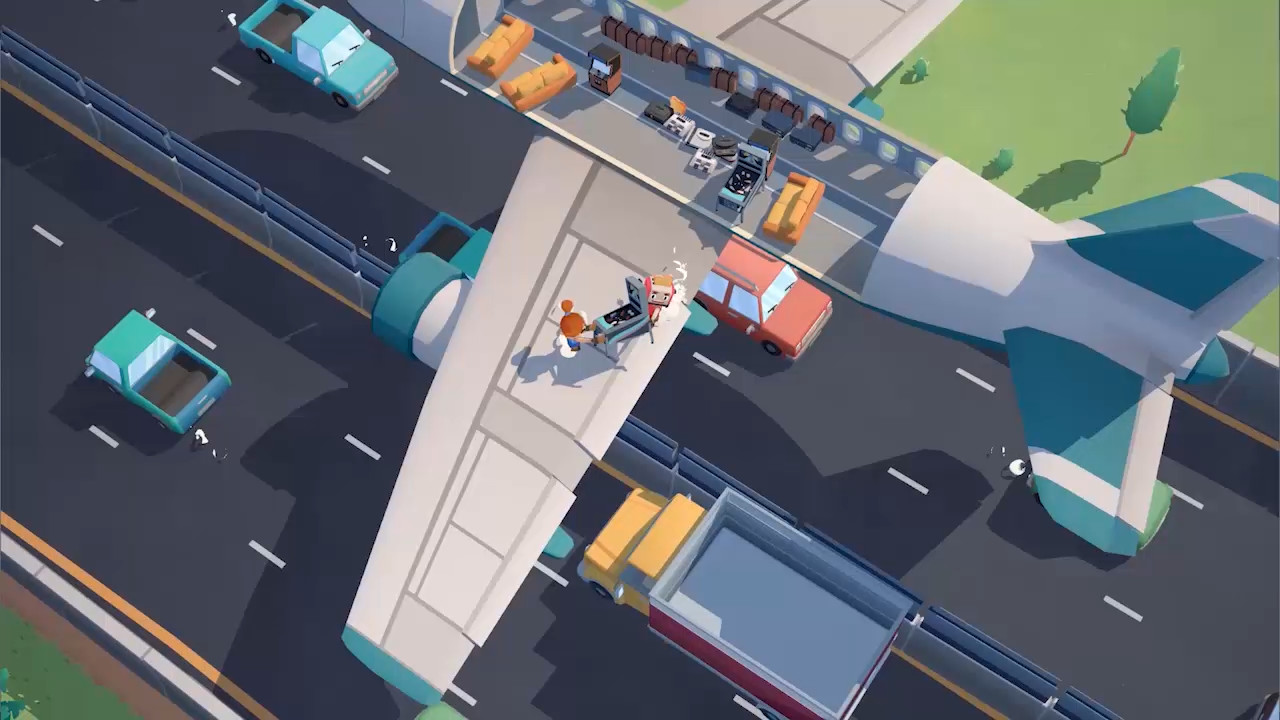
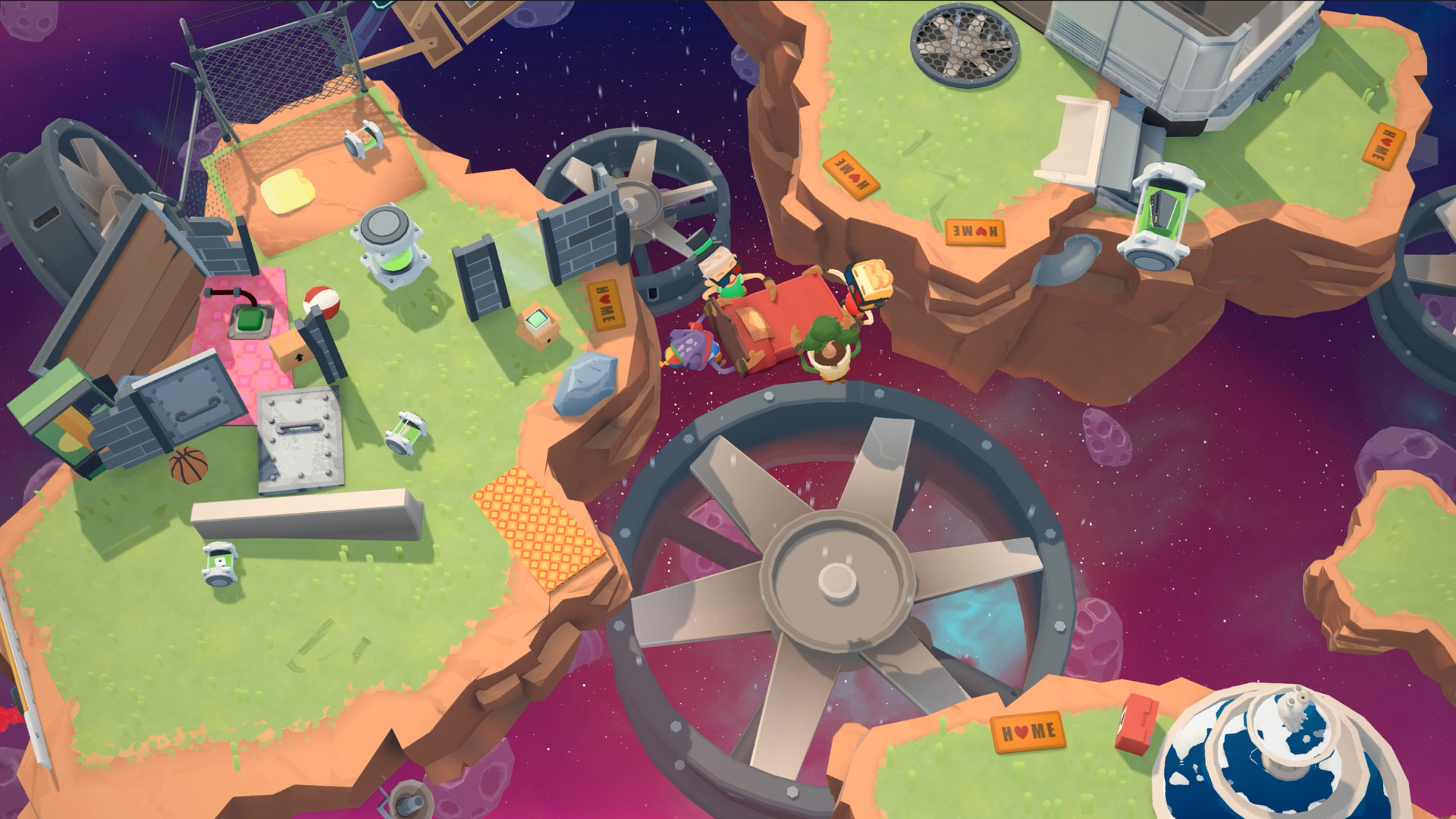
Hauling furniture across the wing of a plane that crash-landed on the highway (official screenshot) © SMG Studio
What Makes It Special (A Creator’s Take)
1. It turns physics’ “refusal to cooperate” directly into comedy
The fun of a physics game lives in the gap between what the player intends and what actually happens. This game pushes that gap entirely toward laughter rather than stress. Furniture moves unpredictably by weight and shape, but a broken window or a dropped table only dents your rating — it never ruins the run. By keeping the cost of failure low and turning mishaps themselves into the reward, it creates an atmosphere where anyone’s blunder just makes the room friendlier.
2. The “two people carry it” rule makes players talk by design
Large furniture can’t be carried alone. You count down to lift together, and call out “your side, a bit more” around corners. This simple rule makes the communication of co-op play itself the content of the game. It’s a game where your teamwork’s rhythm improves, not your button technique — which is exactly why it’s easy to invite non-gamers into.
3. Assist options make it a game you can play with anyone
The game offers assist settings, such as longer time limits or letting one player carry heavy furniture. By providing difficulty adjustment as an official option rather than a handicap, it works even when playing with children or complete beginners. For a party game, designing the doorway is just as important as designing the content.
Points to Note
- There is no online co-op — play is local / shared-screen at its core
- Solo play is possible, but much of the comedy is designed around multiple players
- The stages themselves are simple in structure; this is not a game for long, focused solo sessions
Similar Games / What to Play Next
- If you enjoy cheerful chaos, head to Untitled Goose Game, where one goose stirs up an entire village
- For more big-group co-op mayhem, something like Lethal Company is also worth a look
Wrapping Up
Moving Out takes the universally understood job of “carrying things” and turns it into peak slapstick through physics and co-op. It’s a party game worth owning for the next time friends come over.
- This article is based on official information, store pages, and publicly released footage.
- All images in this article are official materials (© SMG Studio)
- Prices and specifications are as confirmed in November 2026.